Sedmikrásky (Daisies)
My favourite thing about this film is that when I talked to my mother about it she said “Oh yeah we used to do that”.

My mother was born and raised in Prague. During the 1960’s she and her girlfriends would often accept invitations from foreigners to go out to restaurants that typical Czech’s couldn’t afford.

Just like Marie I and Marie II my mother and her friends would send their dates packing when the evening came to an end, and all that could be eaten and drunk was gone. Although those days were very difficult my mother seems to look back with nostalgia.

Unlike Marie I and Marie II I don’t think my mother and her friends decided to just be bad, they were rebellious and wanted to feel the freedom that they imagined people in the west had. Also they craved the luxury of an abundance of food and fresh ingredients.
Growing up I can’t tell you how many times I was informed of how many hours my parents would wait in line for the opportunity to buy bananas only to get to the front of the line and find out there were none left.


The theme in this film is something I can relate to. Even though I haven’t struggled with living in a totalitarian state there are still freedoms and liberation from responsibility I wish I had.
Sometimes I want to just give in to being a little bit bad. Maybe a little food fight is all I need.


This image and these words remind me of my mother.
Hello 2012!
Here we are at the start of another brand new year.

I love New Years because it can be a giant reset button if you want it to be. It’s like a milestone, a moment to reflect on the path you’ve just walked, and also the moment when you move forward again. It’s also a great excuse to put Hunter in a hat!
Lark About is my notebook, where I’ll store and share the things that inspire me and how I buy for Lark.
Happy New Year everyone!
Rocks Off
Destination: Old Faithful Shop


My latest favourite discovery in Vancouver : Old Faithful Shop
Oh my goodness. They stock Fog Linen!!! I’ve got a serious obsession with this brand (a gorgeous line of linen products for home from Japan) and it wasn’t too easy for me to keep myself calm while I was looking around this shop today. The space is absolutely stunning and they have a fantastic collection of “items for daily life”, that are classic and well-made by unique manufacturers with history and craftsmanship. I also got really excited when I saw the industrial laundry baskets by Steele Canvas Basket (Remember these?). The shop owners; Walter and Savannah kindly showed me around and shared some stories with me. Such lovely people! If you’re in Vancouver, I highly recommend to visit their shop.
Read more about this shop HERE.


Love the whole concept in here.


This is a perfect shop for finding lovely gifts. It’s also a very dangerous place for me…


320 W. Cordova Street, Vancouver B.C. V6B 1E8
Check out their blog.

-N.
Destination: Le Petit Atelier de Paris
![[DSC_0039.jpg]](https://i0.wp.com/3.bp.blogspot.com/_q53VclD7MpM/SP48Obdl-CI/AAAAAAAAAFw/UaDXhWZRlM0/s1600/DSC_0039.jpg)
![[DSC00330.JPG]](https://i0.wp.com/3.bp.blogspot.com/_q53VclD7MpM/SHZnXKHWWwI/AAAAAAAAAAk/at_74ILgkzo/s1600/DSC00330.JPG)
Le Petit Atelier de Paris is a small workshop and boutique operated by two artists in the Marais. Their motto, “Du bonheur au quotidien” —”Happiness in the everyday”—is reflected in their charming, simple pottery and housewares.


![[coteparis+c122008.jpg]](https://i0.wp.com/2.bp.blogspot.com/_q53VclD7MpM/SUBrXFyLRiI/AAAAAAAAAI4/3JFBBNqHpc4/s1600/coteparis%2Bc122008.jpg)

(Images below via HERE.)


!!! I screamed when I found their blog. They have the cutest Shiba inu (dog)! Some of my close friends know how much I love Shiba dogs and they think I’m crazy, which I don’t deny. They’re the cutest dogs in the whole world (to me anyway).
Paris, French antiques, beautiful pottery/housewares, plus Shiba dogs….. So perfect!
Look how adorable this one is.
![[pom+pon1.jpg]](https://i0.wp.com/2.bp.blogspot.com/_q53VclD7MpM/SrIsptuzv2I/AAAAAAAAARM/y_vvkS3OBmo/s1600/pom%2Bpon1.jpg)
![[pom+pon2.JPG]](https://i0.wp.com/3.bp.blogspot.com/_q53VclD7MpM/SrIsY2Pv86I/AAAAAAAAARE/WunA0rrKTDs/s1600/pom%2Bpon2.JPG)
![[pom1.JPG]](https://i0.wp.com/2.bp.blogspot.com/_q53VclD7MpM/SfNlRg2SKUI/AAAAAAAAALg/5JDFNcE6lJ0/s1600/pom1.JPG)
![[pain.jpg]](https://i0.wp.com/2.bp.blogspot.com/_q53VclD7MpM/SHZwKaMQLbI/AAAAAAAAABI/cpI5kD4MYVM/s1600/pain.jpg)
-N.
Weekend Listening: Gainsbourg
Serge Gainsbourg – All the things you are (1964)
-N.
Atelier Cézanne


Drawings of Suzanne Lalique


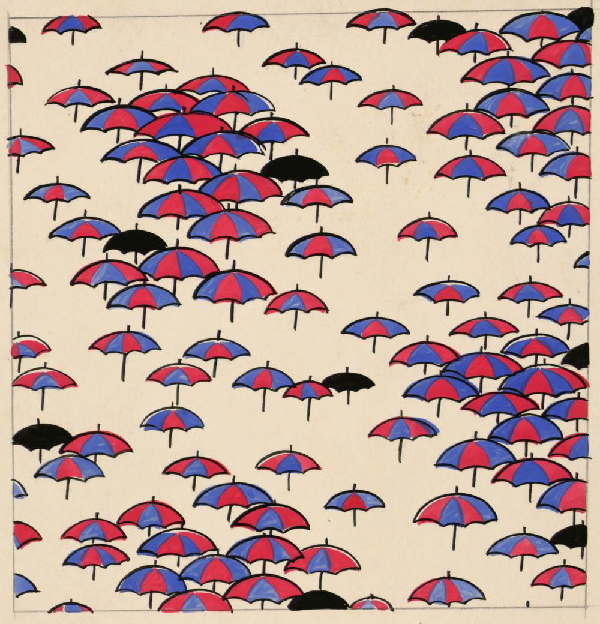
Happy Mother’s Day


A stick, a stone, it’s the end of the road, it’s the rest of a stump, it’s a little alone
It’s a sliver of glass, it is life, it’s the sun, it is night, it is death, it’s a trap, it’s a gun
The oak when it blooms, a fox in the brush, a knot in the wood, the song of a thrush
The wood of the wind, a cliff, a fall, a scratch, a lump, it is nothing at all
It’s the wind blowing free, it’s the end of the slope,
It’s a beam, it’s a void, it’s a hunch, it’s a hope
And the river bank talks of the waters of March,
It’s the end of the strain, the joy in your heart
The foot, the ground, the flesh and the bone,
The beat of the road, a slingshot’s stone
A fish, a flash, a silvery glow, a fight, a bet, the range of a bow
The bed of the well, the end of the line,
The dismay in the face, it’s a loss, it’s a find
A spear, a spike, a point, a nail, a drip, a drop, the end of the tale
A truckload of bricks in the soft morning light,
The shot of a gun in the dead of the night
A mile, a must, a thrust, a bump,
It’s a girl, it’s a rhyme, it’s a cold, it’s the mumps
The plan of the house, the body in bed,
And the car that got stuck, It’s the mud, it’s the mud
A float, a drift, a flight, a wing, a hawk, a quail, the promise of spring
And the riverbank talks of the waters of March,
It’s the promise of life, It’s the joy in your heart
A stick, a stone, it’s the end of the road
It’s the rest of a stump, it’s a little alone
A snake, a stick, it is John, it is Joe,
It’s a thorn in your hand and a cut in your toe
A point, a grain, a bee, a bite, a blink, a buzzard,
A sudden stroke of night
A pin, a needle, a sting, a pain, a snail, a riddle, a wasp, a stain
A pass in the mountains, a horse and a mule,
In the distance the shelves rode three shadows of blue
And the riverbank talks of the waters of March,
It’s the promise of life in your heart, in your heart
A stick, a stone, the end of the road, the rest of a stump, a lonesome road
A sliver of glass, a life, the sun, a knife, a death, the end of the run
And the riverbank talks of the waters of March,
It’s the end of all strain, it’s the joy in your heart.
“Waters of March” (Portuguese: “Águas de Março”) is a Brazilian song composed by Antonio Carlos Jobim. The lyrics, originally written in Portuguese, do not tell a story, but rather present a series of images that form a collage. In both the Portuguese and English versions of the lyrics, “it is a stick, a stone, a sliver of glass, a scratch, a cliff, a knot in the wood, a fish, a pin, the end of the road,” and many other things, although some specific references to Brazilian culture (festa da cumeeira, garrafa de cana), flora (peroba do campo) and folklore (Matita Pereira) were intentionally omitted from the English version, perhaps with the goal of providing a more universal perspective. All these details swirling around the central metaphor of “the Waters of March” can give the impression of the passing of daily life and its continual, inevitable progression towards death, just as the rains of March mark the end of a Brazilian summer. Both sets of lyrics speak of the water being “the promise of life,” perhaps allowing for other, more life-affirming interpretations, and the English contains the additional phrases “the joy in your heart” and the “promise of spring,” a seasonal reference that would be more relevant to most of the English-speaking world. (Wikipedia)
(Video: Elis Regina)
-N.
Teaser (Part 3)

Another photo shoot was arranged for my little project for Lark the other day. I shot a lot of men’s clothes this time. Again, here are some random behind-the-scene shots from the day.

(Shoes by Zeha-Berlin)


(Jacket by Barbour ToKiTo)


Can you see the grape?
(Shirt by Burkman Bros.)

(Shirt by Chimala, Jacket and Pants by Frank Leder)


(Jacket by Frank Leder, Pants by Burkman Bros., Shoes by Zeha-Berlin, Shirt by Gilded Age)

It was nice that Jordan from Grey Manner came to visit us in the afternoon.

I wasn’t really paying attention, but Jordan was also taking pictures of the mess I created.
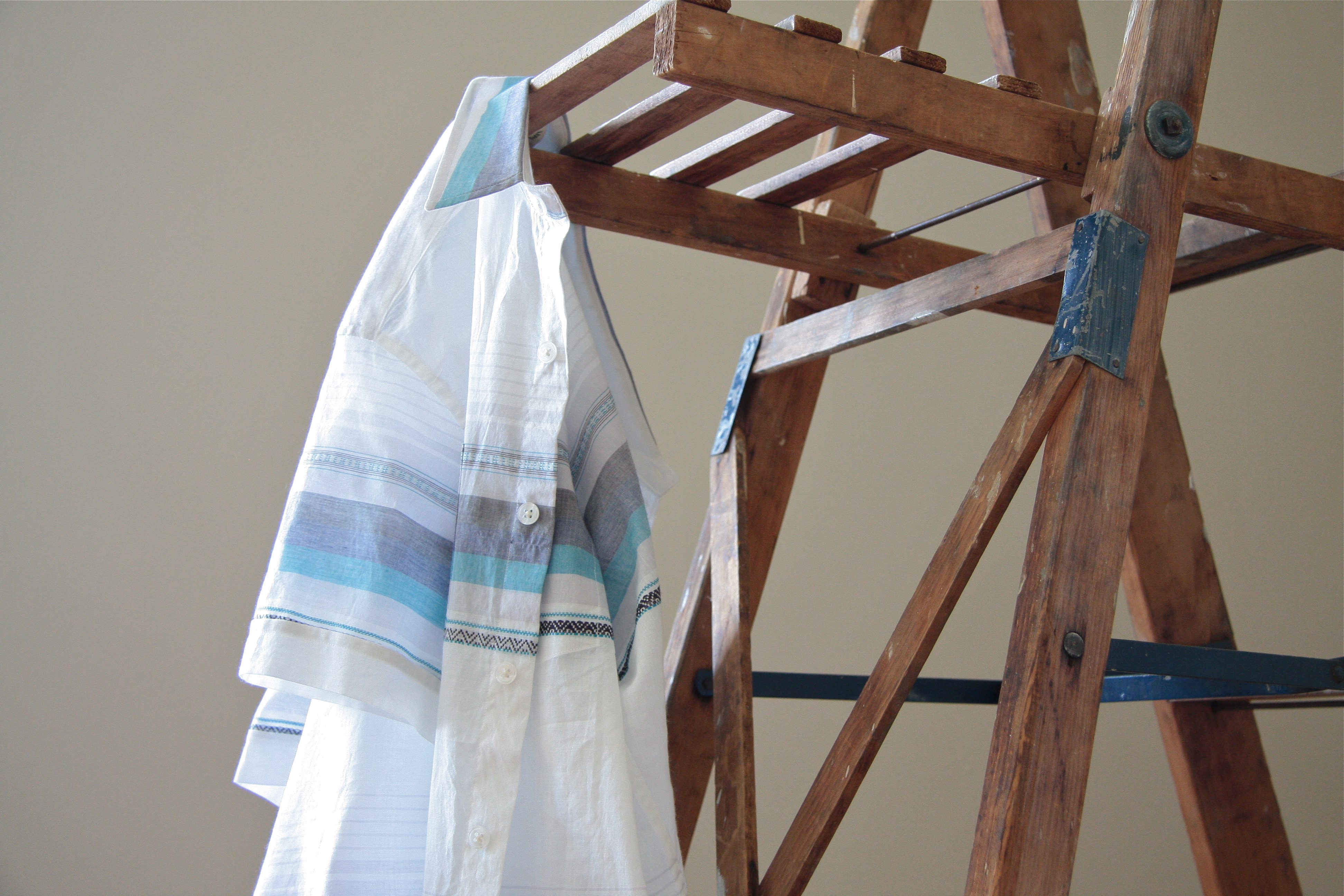
(Shirt by Lova)
Definitely much more pictures to share very soon…
-N.
Sketchbook


Sketches in watercolour and pencil by Fabrice Moireau
Fabrice Moireau is a seasoned traveler who brings back from his journeys sketchbooks which are valuable cultural and ethnographic records in themselves. He is particularly interested in the world’s architectural heritage and in plants and gardens. In his work, which has illustrated several publications, he seeks particularly to convey in watercolor his fascination with the subtle play of light, or the atmosphere of a street or landscape.
It’d be nice to remember some views in sketches like these,
the places I’ve been to, the things I’ve eaten, or just random stuff I’ve seen.
and not always in photographs maybe.
I think I want to start drawing again.
-N.
Writers’ Rooms

.jpg)
George Bernard Shaw (Read about his room here.)
“Imagination is the beginning of creation. You imagine what you desire, you will what you imagine and at last you create what you will.”


(Above: George Bernard Shaw at work in his summerhouse on his 90th birthday in 1946.)
*****

Virginia Woolf (Read about her room here.)
“I thought how unpleasant it is to be locked out; and I thought how it is worse, perhaps, to be locked in.”


(Above: Virginia Woolf’s writing table at Monk’s House, Sussex, England, 1967.)
*****


Rudyard Kipling (Read about his room here.)
“The first condition of understanding a foreign country is to smell it.”

*****

Dylan Thomas (Read about his room here.)
“Somebody’s boring me. I think it’s me.”


-N.
Teaser (Part 2): Sam’s Smile


Here are some more photos form the shoot I did for Lark‘s summer look book (coming soon).
Sam came in our store one day and tried a pair of boots on. I noticed she had a beautifully aged leather knapsack and while we were taking about the boots I couldn’t help but stare at her bag. I think that’s how I met her for the very first time. It was about 2 years ago and we kept running into each other on the street or in a cafe in the neighbourhood, then we became more acquainted. She left for Australia to travel and I didn’t see her anymore for a really long time. Recently I ran into her at a cafe and the timing couldn’t be more perfect as I was scouting for a model for this shoot at that time. (She modelled for our editorial project in summer 2008 as well before her big trip.) This lovely girl has a great style and personality, and always has the most amazing smile!
-N.


 Lark About